
Your Vagus Nerve Is the Key to Calm. Here's What That Actually Means.
You may have seen it mentioned on social media, in a podcast, or attached to a wellness product promising instant calm. The vagus nerve is having a moment and unlike a lot of wellness trends, the science behind it is genuinely compelling.
But what is it, really? And why does it matter for how you feel day to day?
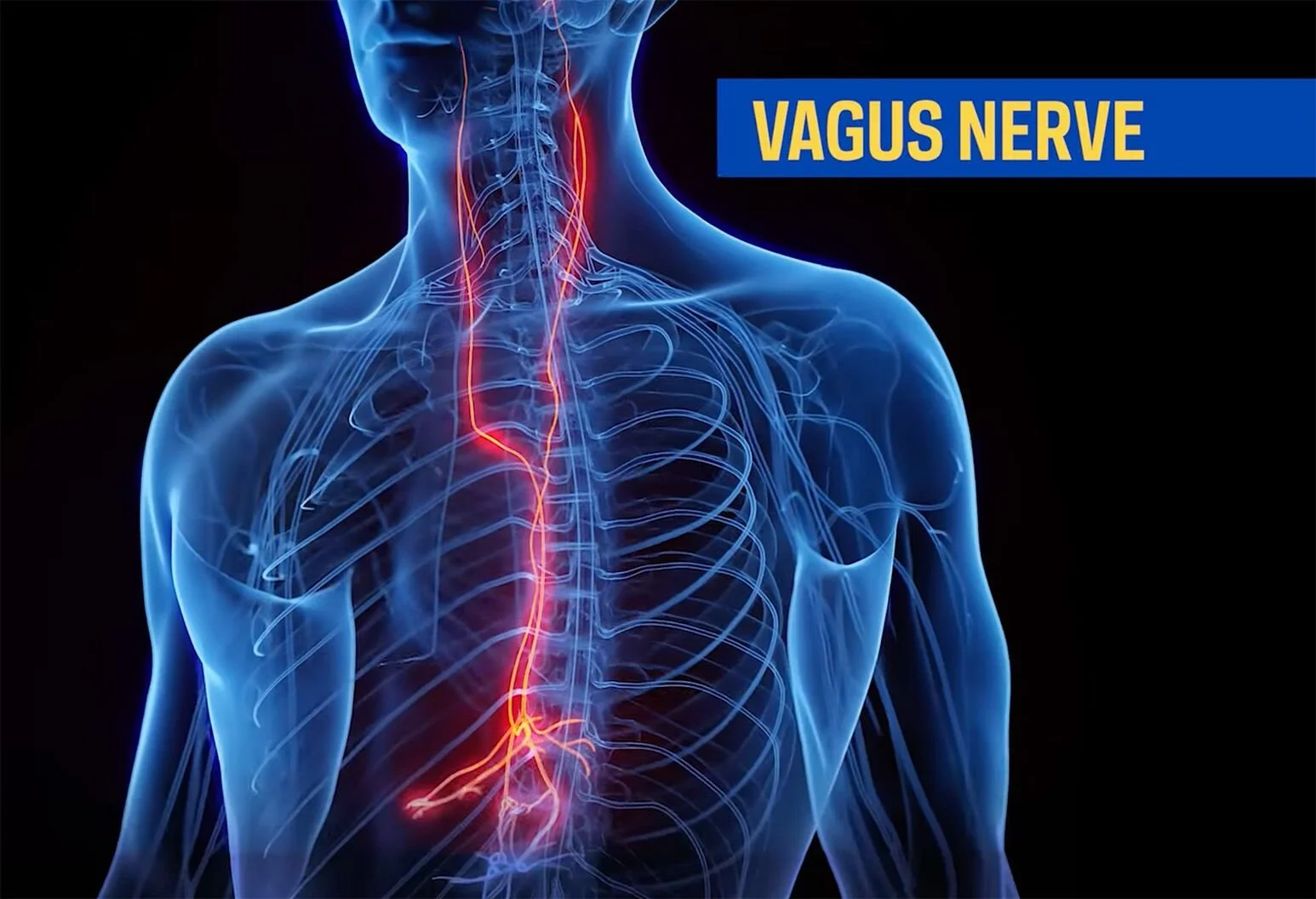
The nerve that runs everything
The vagus nerve is the longest cranial nerve in the body. It travels from the base of your brain all the way down through your neck, chest, heart, lungs, and gut, connecting your brain to almost every major organ in your body. It's the main component of the parasympathetic nervous system, responsible for bodily functions during rest, keeping your heart rate steady, your digestion moving, and your stress response in check.
When you feel your chest tighten before a difficult conversation, or your stomach drop when you receive bad news, that's your vagus nerve at work. It initiates your automatic responses to perceived threats or safety. It's why your heart races or your stomach tightens when you're feeling scared or stressed.
In other words, the vagus nerve is the body's built-in communication highway between what's happening in the world and how you feel inside.
What is vagal tone and why does yours matter?
Vagal tone refers to how efficiently your vagus nerve functions. Think of it like the flexibility of a muscle, the higher your vagal tone, the more easily your body can shift between states of activation and rest.
Higher vagal tone means faster stress recovery and lower resting anxiety and it responds to training. People with high vagal tone tend to be more emotionally resilient, recover from stress more quickly, and experience greater overall wellbeing. People with low vagal tone often struggle with anxiety, chronic stress, digestive issues, and difficulty regulating their emotions.
The good news? Vagal tone is not fixed. It can be improved, deliberately and consistently through practices you probably already know about.
What the latest research shows
This isn't an emerging wellness theory. Science is catching up rapidly. An August 2025 randomized controlled trial published in Applied Sciences found that four weeks of vagus nerve stimulation produced significant improvements in stress, cognitive anxiety, confidence, and depression compared with controls.
The Global Wellness Summit named neurowellness one of 2026's defining health trends, with vagus nerve stimulation specifically called out as a tool being reframed as nervous system medicine rather than wellness hype.
As the principal conduit of bidirectional communication between the central nervous system and peripheral organs, the vagus nerve integrates autonomic control, immune modulation, metabolic regulation, circadian biology, and emotional state. It is, quite literally, the nerve that connects everything.
How to actually stimulate it without a device
You don't need expensive technology. Some of the most effective vagus nerve practices are remarkably simple:
Slow, extended exhales. The exhale activates the parasympathetic system directly. Try breathing in for 4 counts, out for 6 to 8. Even a few minutes shifts the nervous system noticeably.
Cold exposure. Cold facial exposure produces immediate measurable heart rate drops via the dive reflex, a direct vagal stimulation response. A cold splash on your face or a cool shower activates the same pathway.
Humming, singing, or gargling. The vagus nerve runs through the throat. Vibration stimulates it directly, which is why humming or gargling with water can produce a surprisingly fast calming effect.
Breathwork. Rhythmic, conscious breathing is one of the most researched and accessible ways to increase vagal tone over time and its effects compound with consistent practice.
Social connection. The vagus nerve is also activated by safe, attuned connection with others. Eye contact, warm conversation, feeling genuinely heard, these aren't just nice to have. They are physiologically regulating.
Where this fits into your healing
Understanding the vagus nerve reframes something important: anxiety, emotional reactivity, and stress are not character flaws or weaknesses. They are physiological states and physiological states can be changed.
At New Ground Wellness, vagus nerve work sits at the intersection of everything we do. Our breathwork and cold exposure sessions with Lucinda Bibbs are designed specifically to build vagal tone over time, training the nervous system toward greater resilience, regulation, and ease. Combined with counselling, somatic therapy, and community connection, this is what holistic healing actually looks like in practice.